
REACTIVATION
This project starts from a typological investigation of telephone exchanges distributed throughout the city of Madrid. Although these infrastructures appear diverse in their formal expression, they are all governed by a standardized manual that imposes a highly rigid structural grid. This underlying regularity, a product of their technical and functional origins, has resulted in buildings that are strongly objectified and spatially inflexible. Over time, many of these telephone exchanges have become obsolete, raising the question of how to meaningfully repurpose them within the contemporary urban fabric.
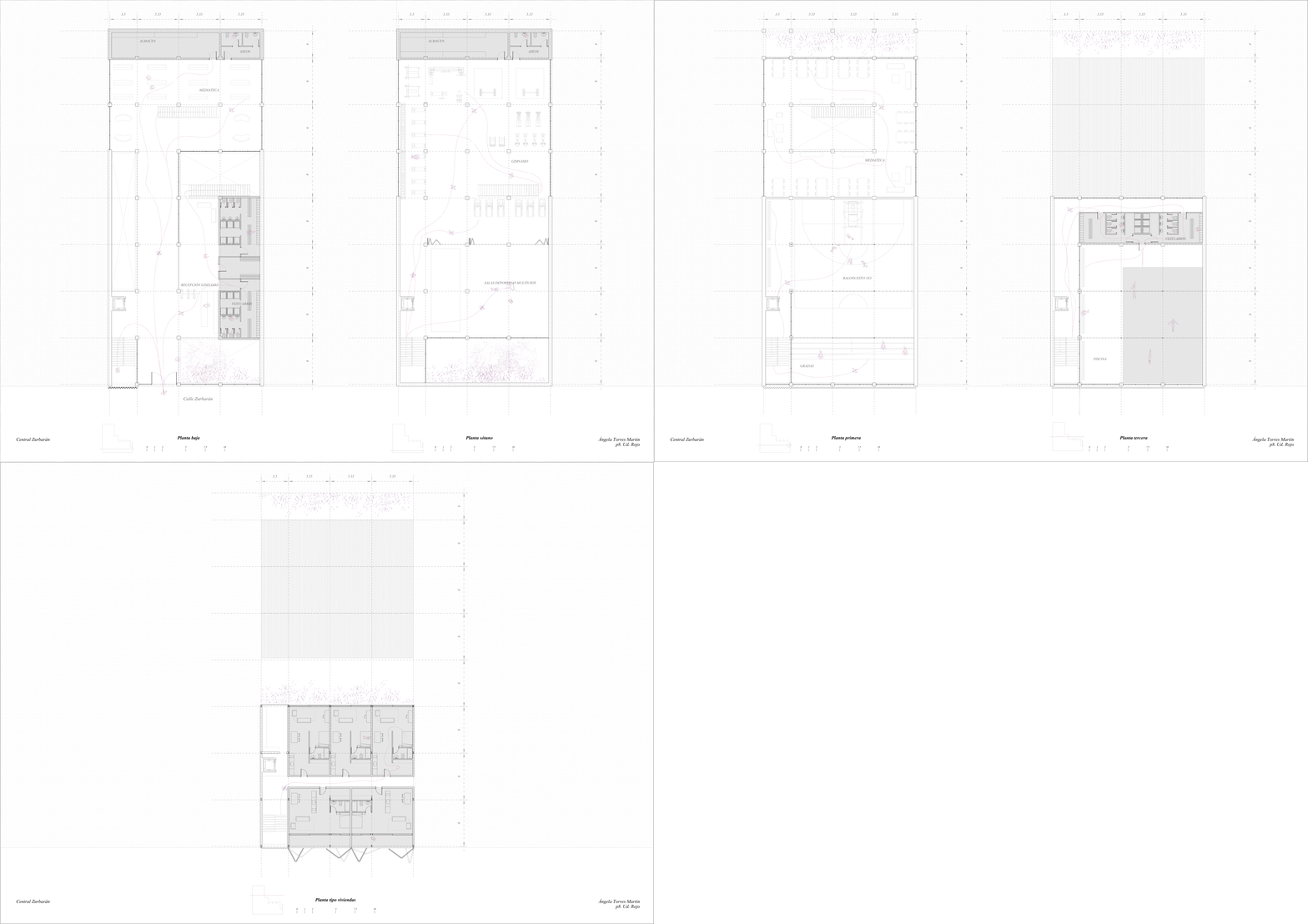
The proposal seeks to reactivate these dormant structures by introducing new programmatic units with heterogeneous spatial demands into an architectural framework originally designed for singular, repetitive functions. This tension between the rigid preexistence and the dynamic nature of the new uses serves as the catalyst for a project that not only transforms the interior logic of the building but also reconsiders its relationship with the city.
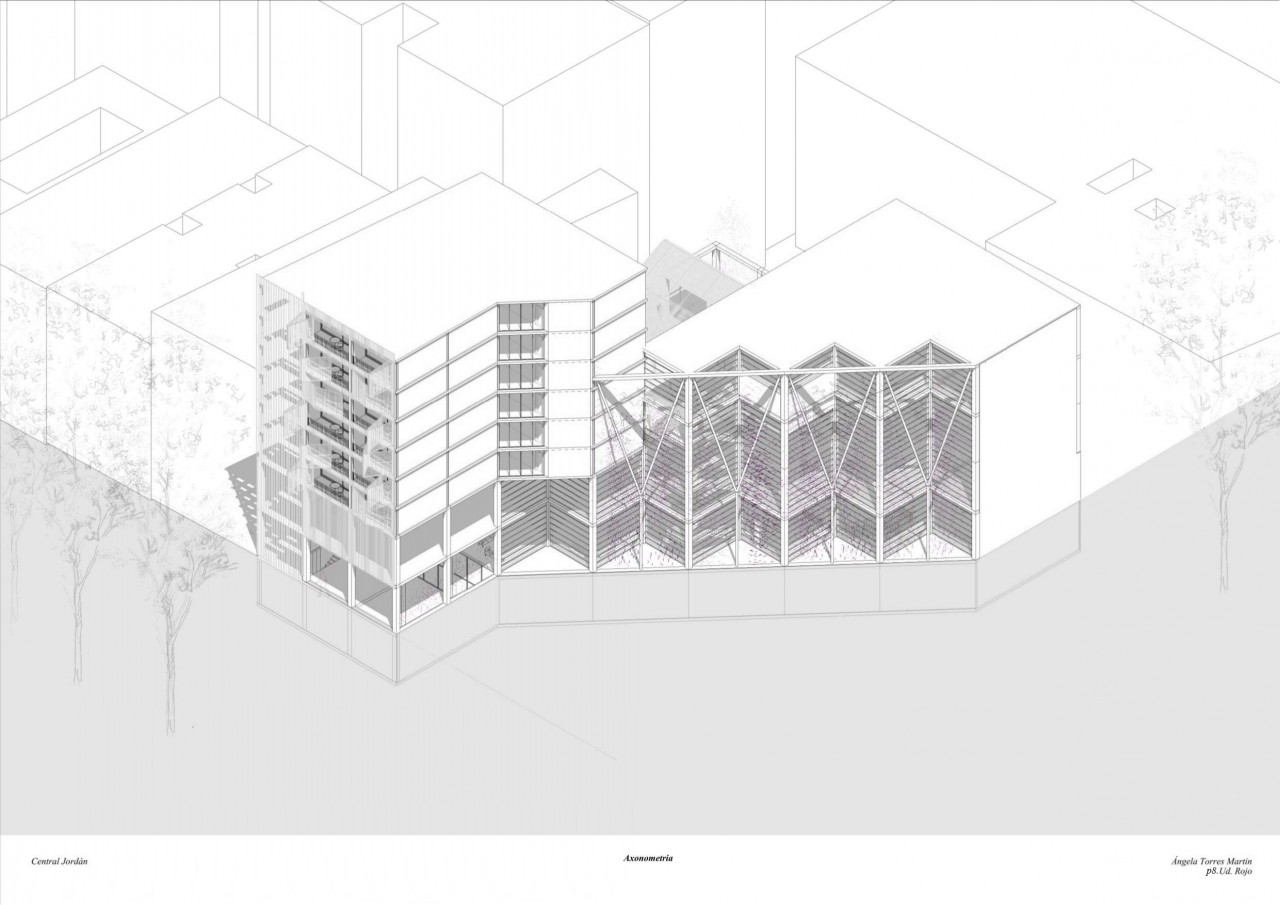
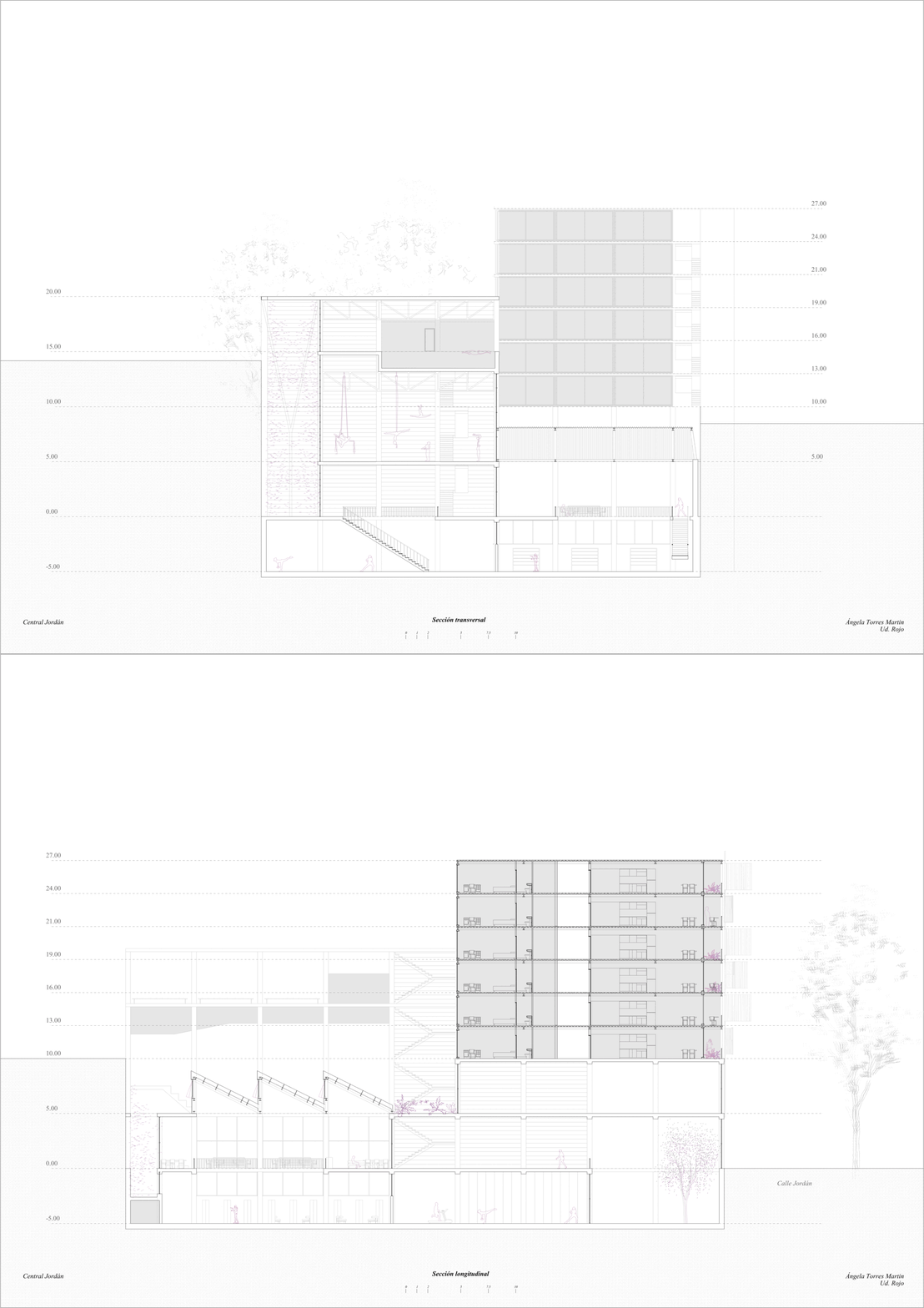
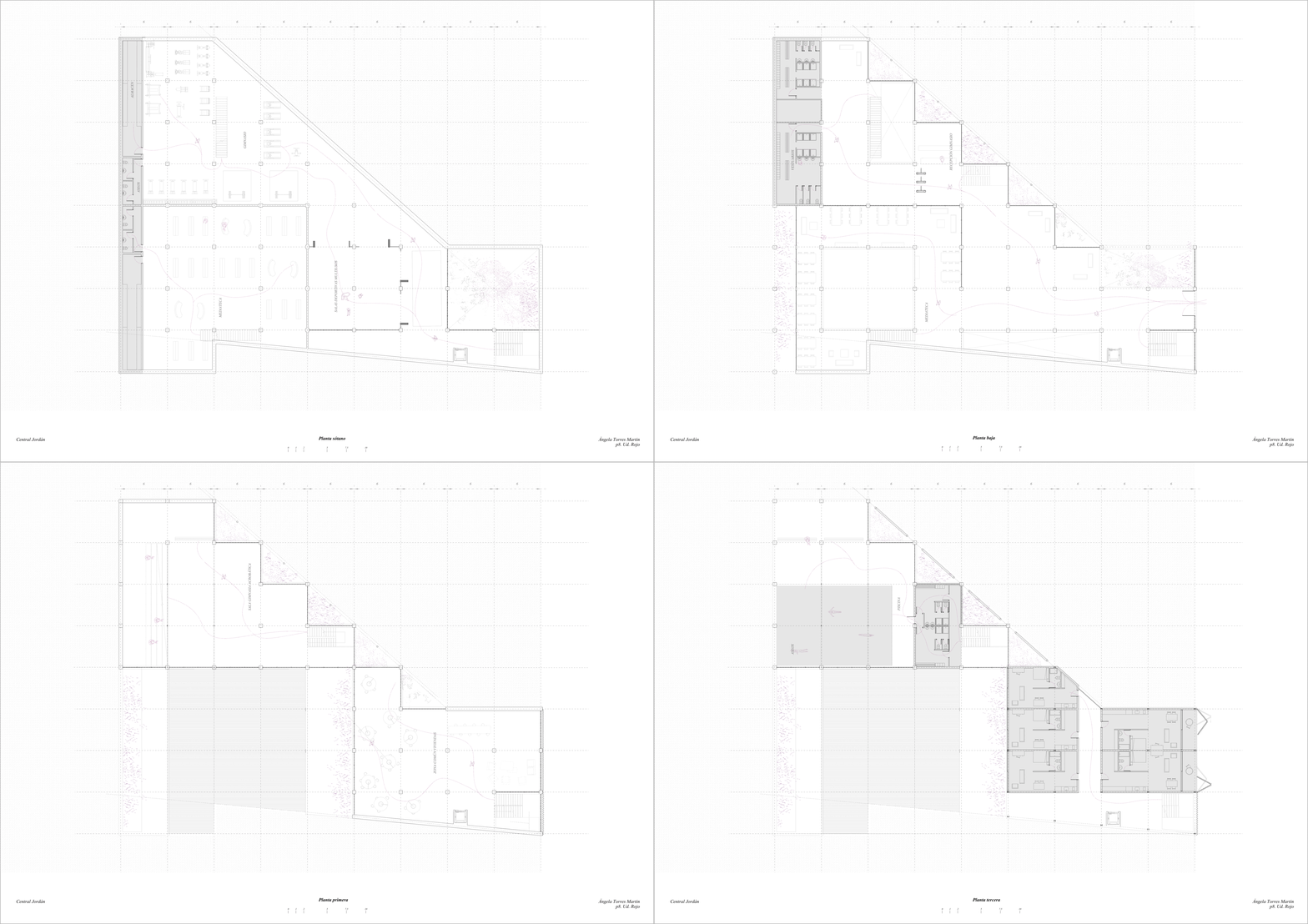
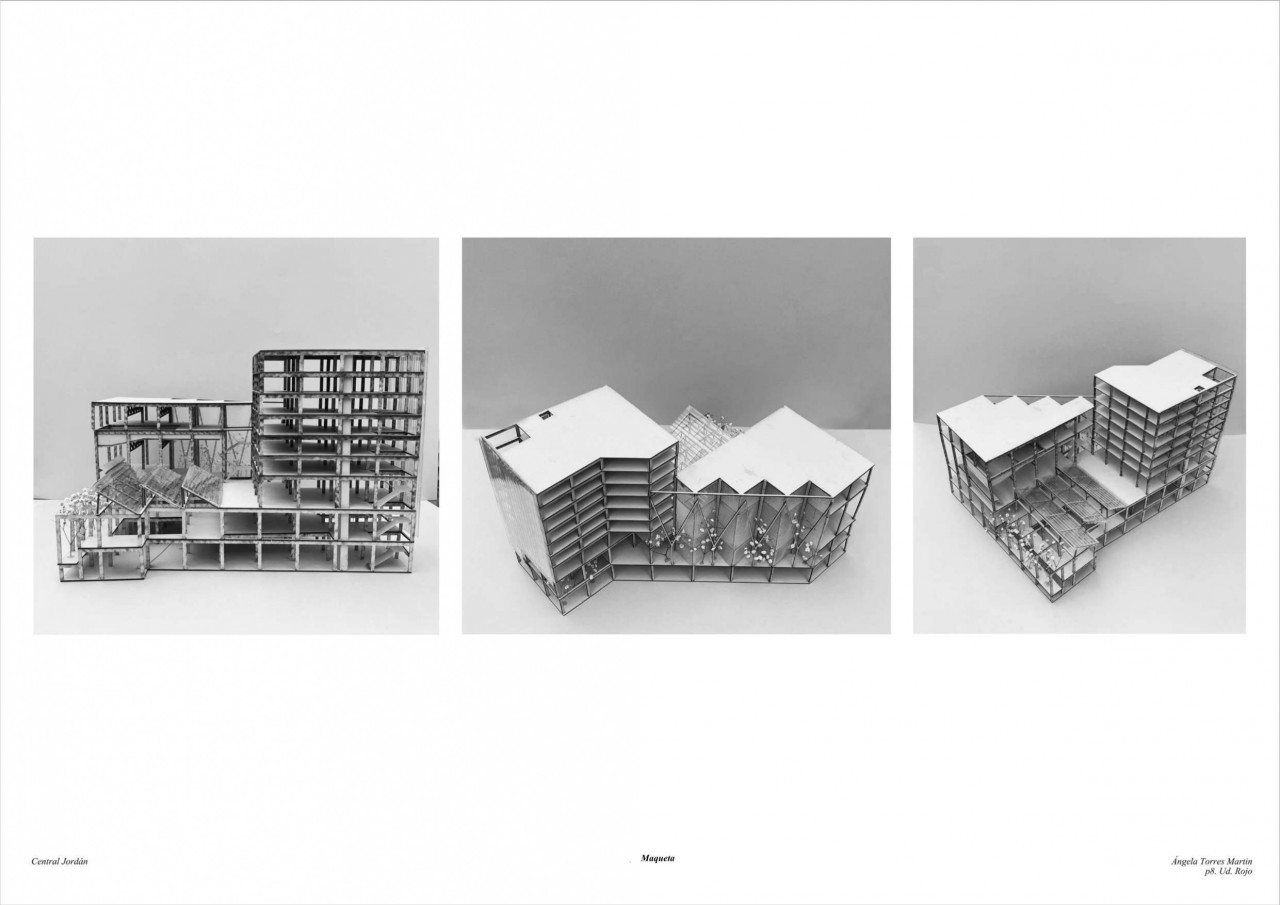
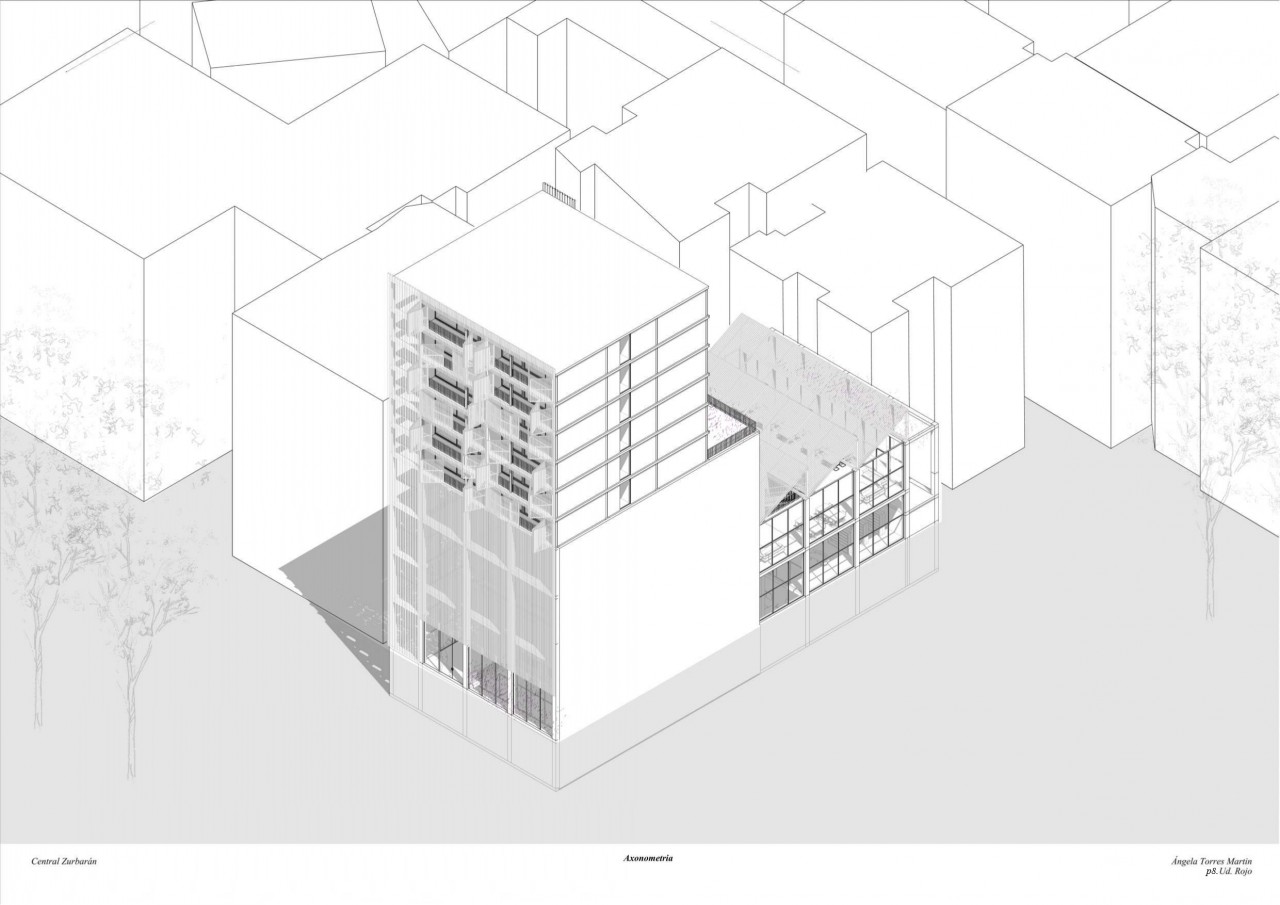
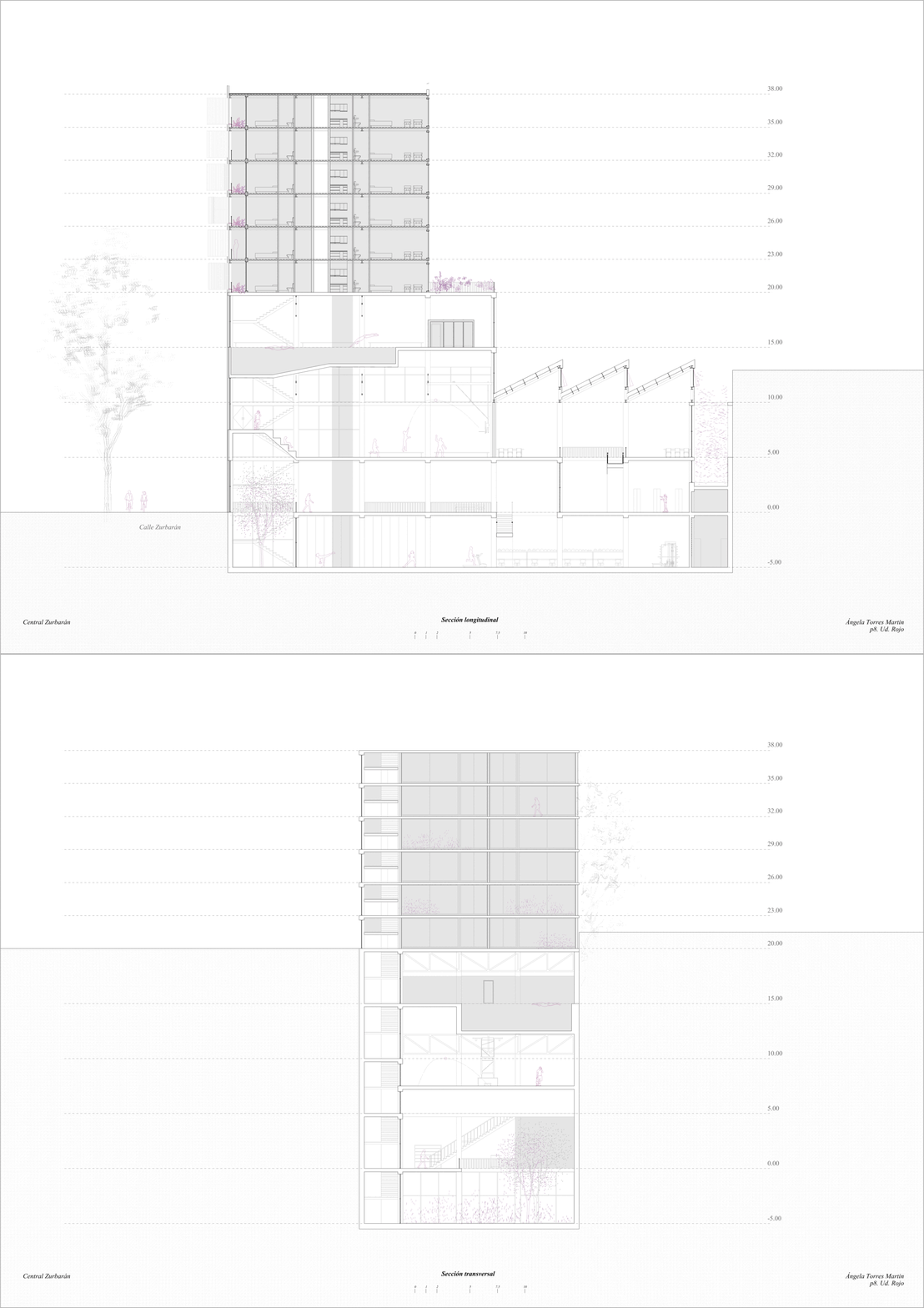
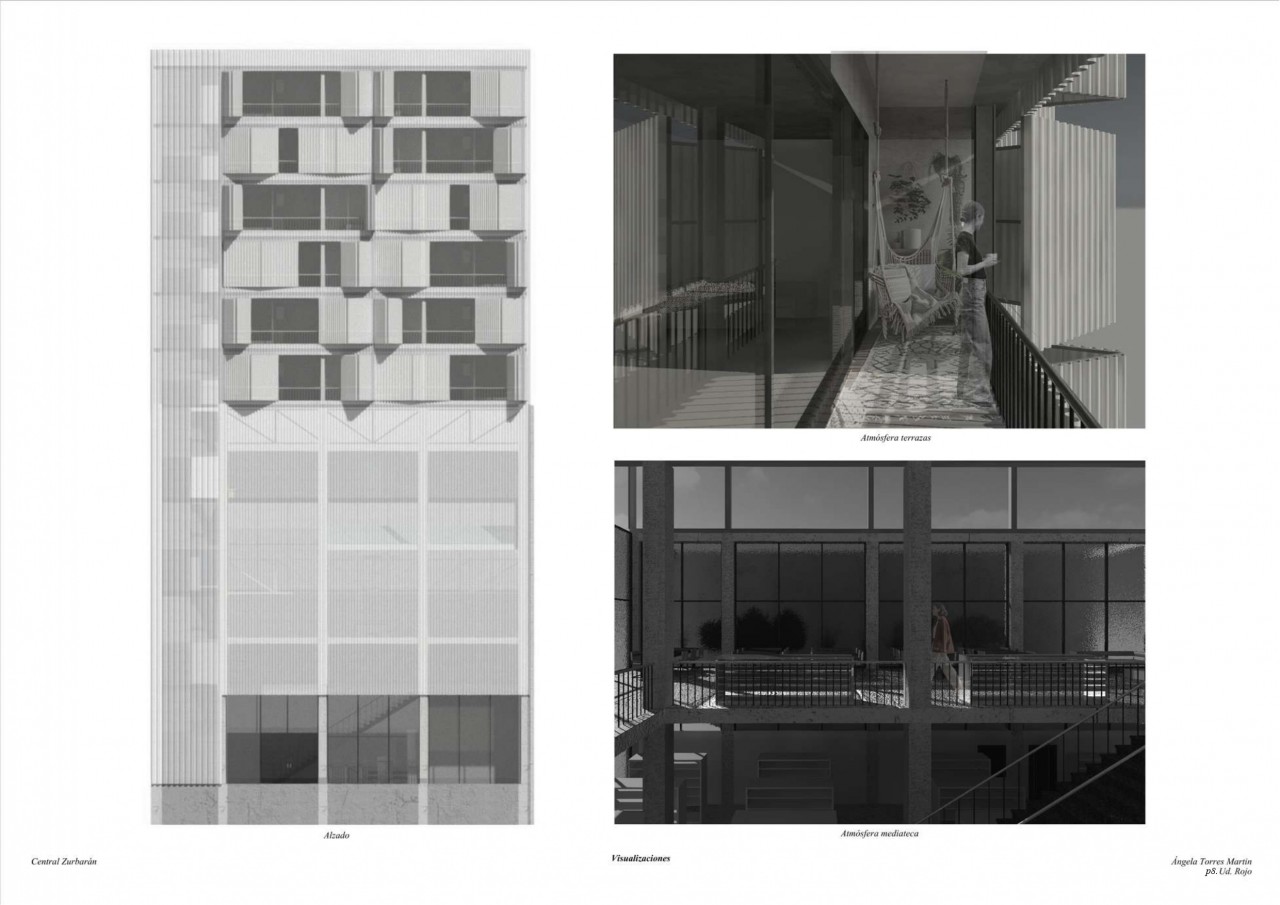
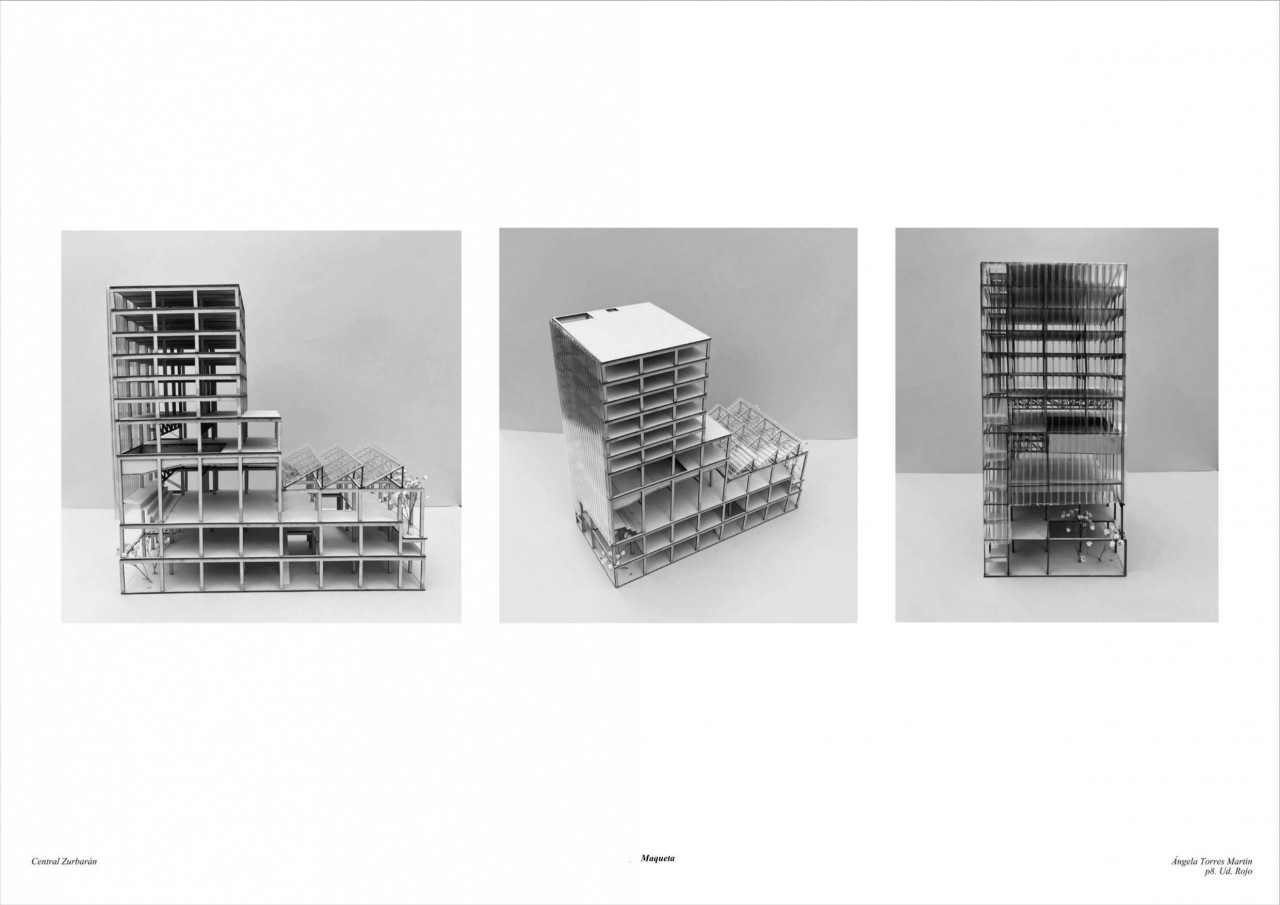
Instead of pursuing an approach that erases or replaces the existing structure, the intervention preserves and reinterprets the architecture through three precise strategies. Firstly, landscaped perimeter setbacks soften the building’s boundaries, creating transitional zones that promote urban integration and spatial porosity. Secondly, vertical extensions are introduced in continuity with the original structural logic, allowing for coherent growth while accommodating new spatial and programmatic requirements. Thirdly, a system of voids and alternative circulations detaches internal programs from the central cores, fostering visual and programmatic interferences that generate new spatial relationships and degrees of openness.
Collectively, these operations redefine the telephone exchange not as a closed object but as an open, adaptive infrastructure, capable of accommodating evolving uses and participating in broader urban and social networks. The project frames the existing structure not as a constraint, but as a resource to activate its latent potential and enabling its transformation without erasing its architectural identity.
The proposal seeks to reactivate these dormant structures by introducing new programmatic units with heterogeneous spatial demands into an architectural framework originally designed for singular, repetitive functions. This tension between the rigid preexistence and the dynamic nature of the new uses serves as the catalyst for a project that not only transforms the interior logic of the building but also reconsiders its relationship with the city.
Instead of pursuing an approach that erases or replaces the existing structure, the intervention preserves and reinterprets the architecture through three precise strategies. Firstly, landscaped perimeter setbacks soften the building’s boundaries, creating transitional zones that promote urban integration and spatial porosity. Secondly, vertical extensions are introduced in continuity with the original structural logic, allowing for coherent growth while accommodating new spatial and programmatic requirements. Thirdly, a system of voids and alternative circulations detaches internal programs from the central cores, fostering visual and programmatic interferences that generate new spatial relationships and degrees of openness.
Collectively, these operations redefine the telephone exchange not as a closed object but as an open, adaptive infrastructure, capable of accommodating evolving uses and participating in broader urban and social networks. The project frames the existing structure not as a constraint, but as a resource to activate its latent potential and enabling its transformation without erasing its architectural identity.
- 00 - Description
- 01 - JORDAN AXO
- 02 - SECTIONS
- 03 - PLANS
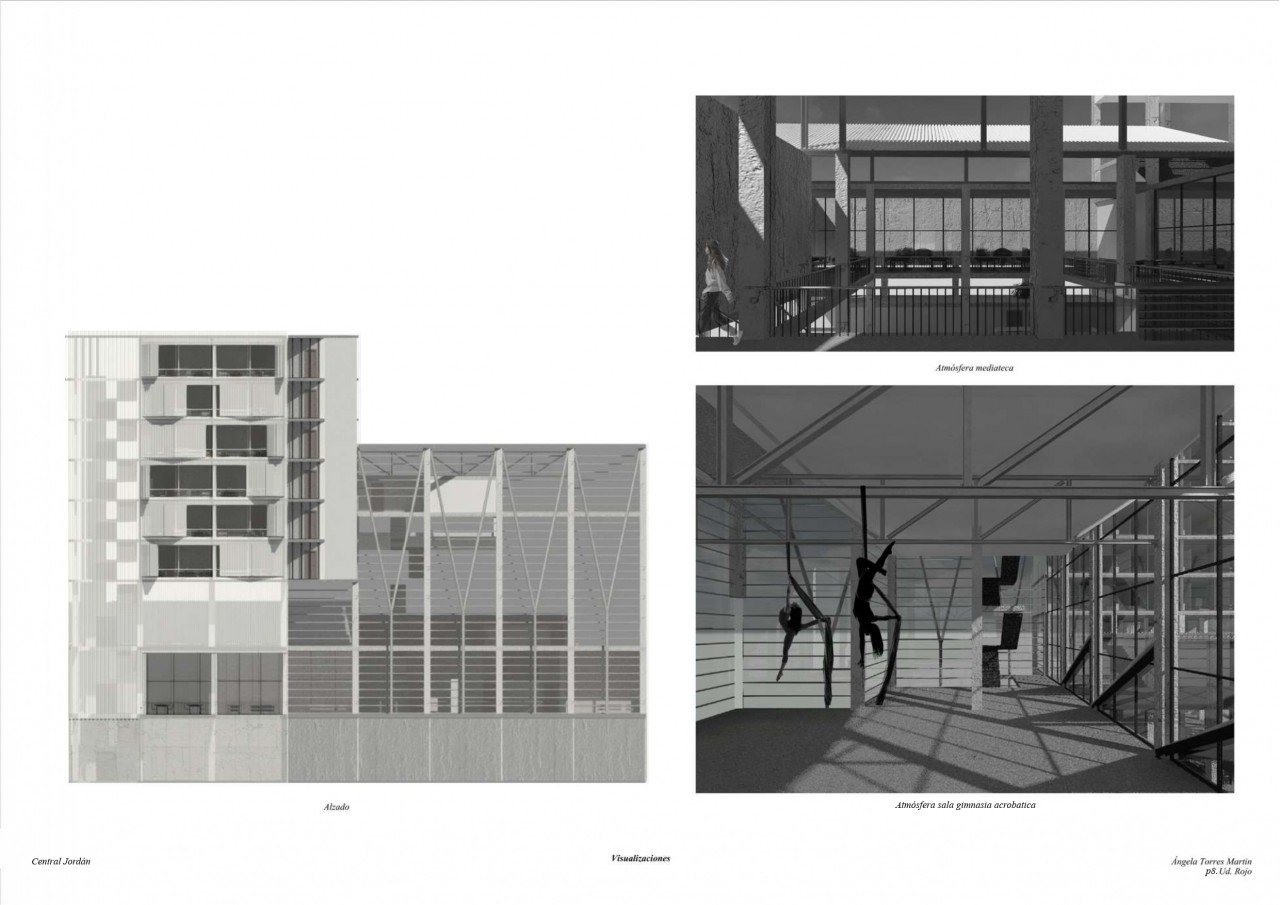
- 04 - IMAGES
- 05 - MODEL
- 06 - ZURBARAN AXO
- 07 - SECTIONS
- 08 - PLANS
- 09 - IMAGES
- 10 - MODEL